EFT Tapping
EFT (Emotional Freedom Techniques) is a brief intervention combining exposure-based cognitive therapy with tapping on acupressure points, paired with a spoken acceptance statement. Over the past two decades it's moved from a fringe technique to one with a substantial research base — over 300 published studies, including more than 60 randomised controlled trials, across more than 10 countries
How It Works
You focus on the issue you want to release — a thought, feeling, or limiting belief — while tapping specific acupressure points on the face and body. This is thought to calm the amygdala (the brain's stress centre) and activate the parasympathetic nervous system's relaxation response, reducing the intensity of the original thought or feeling. It's gentle, requires no equipment, and most people can learn the basic sequence quickly.
EFT (Emotional Freedom Techniques) is a brief intervention combining elements of exposure, cognitive therapy, and somatic stimulation. It is often referred to as ' tapping’ as it uses a two-finger tapping process with a cognitive acceptance statement. EFT Tapping has moved in the past two decades from a fringe therapy to widespread professional acceptance and has been researched in more than 10 countries by more than 60 investigators, whose results have been published in more than 20 different peer-reviewed journals. It has a growing database of over 320 Publications and 65 plus of randomized clinical trials. Tapping or EFT, is a psychophysiological technique.
How Does It Work?
.
Dr Peta Stapleton is a clinical and health psychologist and world-renowned researcher in EFT (Emotional Freedom Techniques) or Tapping. In 2019, Dr Peta was named Psychologist of the Year by the Australian Allied Health Awards for her research contributions in EFT Tapping.
EFT (Emotional Freedom Techniques) or Tapping is a brief stress reduction intervention and uses a two-finger tapping process on acupuncture points with a cognitive statement.https://youtu.be/GMa6Dv4OUrc?si=islUKtjfU1FMd1lk
What It Can Help With?
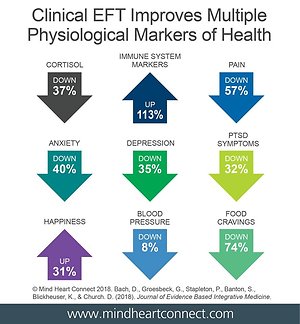
Research and clinical use support EFT for:
- Phobias, fears & panic
- Anxiety & PTSD
- Depression
- Pain management (including tension headaches & fibromyalgia)
- Insomnia
- Weight issues & food cravings
- Painful memories & abuse-related trauma
- Children's anxieties
In the workplace, EFT is also used for peak performance — reducing stress, building resilience to change, and supporting communication, motivation, and morale.
Research & Ongoing Developments
The Evidence
EFT has a growing evidence base, including RCTs showing benefit for anxiety, phobias, PTSD, depression, pain, insomnia, and weight management. It's been evaluated within an NHS service in Britain, where it produced significant improvements in anxiety and psychological wellbeing over an average of eight sessions.
Full citations and study-by-study detail have moved to the Research & Evidence page, to keep this page focused on what EFT is and how it can help.
About Sue Sawyer & EFT
Sue Sawyer is a Master Practitioner and Trainer of EFT, and has trained directly with EFT founder Gary Craig, alongside Dr David Lake and Steve Wells (Simple Energy Techniques),.
EFT founder Gary Craig
Dr David Lake and Steve Wells (Simple Energy Techniques)